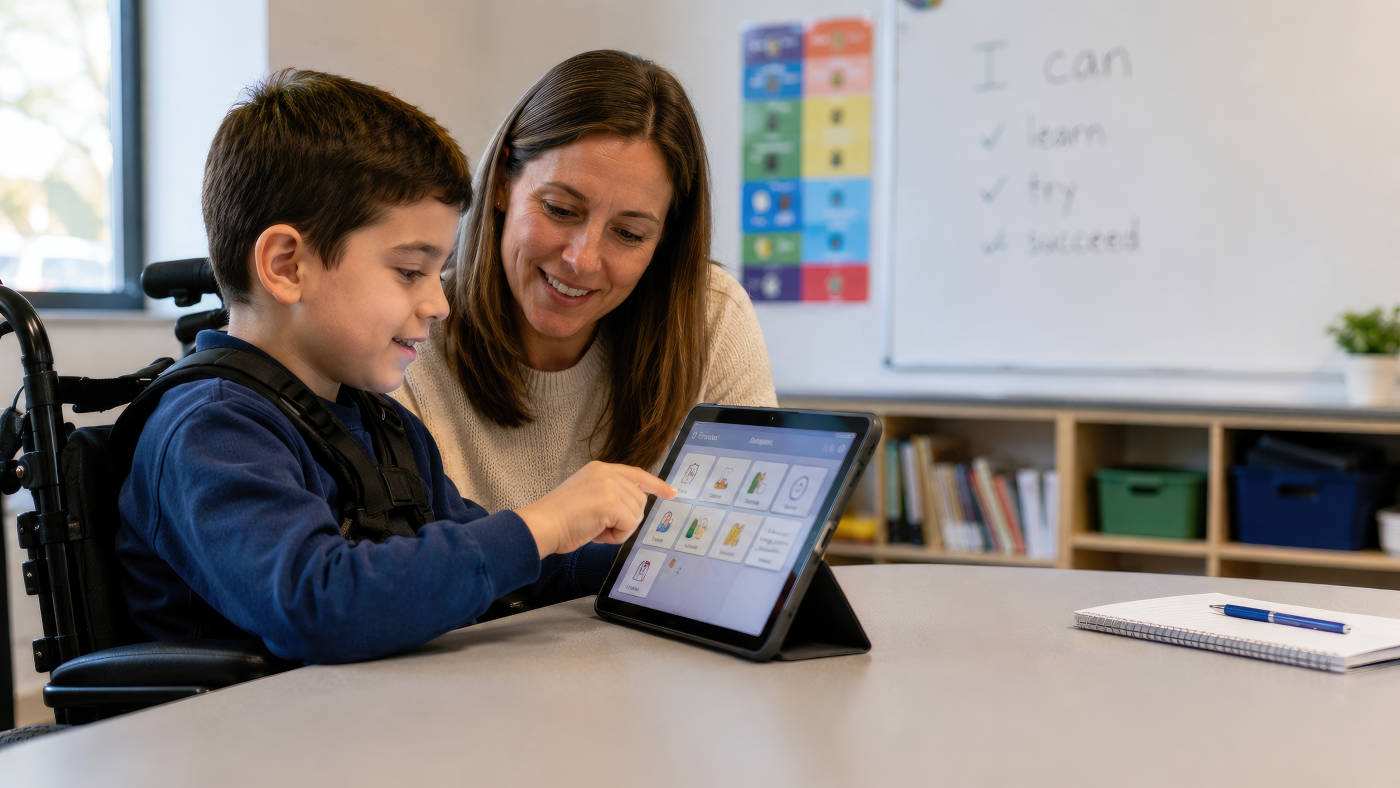
Watching your child struggle to use equipment that's supposed to help, simply because no one at school has been trained or assigned to support it, is its own kind of heartbreak. You fought to get the device approved, and now you're fighting again to make sure it's used as intended. It can feel like winning one battle only to discover another.
If your child has an assistive technology device sitting mostly unused because no one consistently helps them use it, education litigation might be exactly what opens the door to the one-to-one support your child actually needs.
I'm Attorney Joseph Fein, and I help families push districts to fund the staffing that makes assistive technology actually work, not just approve it on paper. I'm based in Cedarhurst, New York, and I serve school districts across the New York area, including Cedarhurst, Nassau County, and Long Island, that face this exact gap. Schedule a consultation today to get the compassionate legal support you and your family deserve.
Why Assistive Technology Alone Isn't Always Enough
Federal law requires school districts to consider assistive technology at every IEP meeting, and if a device is necessary for your child to receive a free, appropriate public education, cost isn't a valid reason to deny it. But approving a device is only half of what the law actually requires. Assistive technology includes both the device itself and the services needed to select, set up, and consistently use it, which often means staff training or hands-on support built into the school day.
When a district provides a device without the support needed to use it well, the device tends to sit unused, get used inconsistently, or get used incorrectly, none of which serves your child the way the IEP intended. That gap is exactly where an assistive technology dispute often starts.
It's easy for a district to point to the device itself as proof that it's meeting its obligations, since a purchase order or a delivery date is simple to document. Whether a child can use that device independently, consistently, and successfully is much harder to measure, which is why so many families feel the fight isn't really over once the device finally arrives.
How an Assistive Technology Dispute Can Reveal the Need for a One-to-One Aide
When you formally dispute how a district is implementing assistive technology, whether through a state complaint, mediation, or a due process filing, the district has to explain exactly how the device is being supported day to day. Often, that explanation reveals that no one is consistently trained or assigned to help your child use the device, which is itself a service failure under the law.
Once that gap is documented, it becomes much harder for a district to argue that a one-to-one aide isn't necessary, since the aide would be the person actually closing that exact gap between what was approved on paper and what's happening in the classroom. What started as a dispute over a device can build the record needed to justify dedicated staffing support.
This works because a one-to-one aide isn't a separate ask floating on its own; it's tied directly to the same legal obligation that got the device approved in the first place. If a district already agreed the technology is necessary for your child's education, it becomes much harder to argue the support needed to make that technology usable isn't equally necessary.
What to Document Before Filing an Assistive Technology Dispute
Districts respond best to evidence, not general frustration, so building a record before you file matters. Consider gathering:
Usage logs: Notes on how often, and how well, the device is actually being used at school.
Communication with staff: Emails or messages showing requests for support or training that went unanswered.
Evaluation reports: Any assessments recommending the device or describing how it should be implemented.
Comparison to home use: Examples of your child using the device successfully with consistent support at home.
IEP language itself: The exact wording used to describe the device and any support it was supposed to come with.
This kind of documentation turns a general complaint into a specific, evidence-backed argument about exactly what's missing. That distinction often determines whether a dispute resolves quickly or drags on for months.
It also helps to document the gap consistently over time rather than relying on a single bad day at school. A pattern spanning several weeks, showing the same breakdown happening again and again, carries far more weight with a district or a hearing officer than one frustrating afternoon, however clearly it illustrates the underlying problem.
Turning an Assistive Technology Dispute Into Real Support for Your Child
An assistive technology dispute doesn't have to be just about the device itself. Handled well, it can become the evidence your child needs to finally get the hands-on support that makes that device worth having in the first place.
At the Law Offices of Joseph M. Fein, I've helped families turn exactly this kind of gap into real, funded support for their child. I'm located in Cedarhurst, New York, and I serve clients across school districts in the New York area, including Cedarhurst, Nassau County, and Long Island, who are ready to push for what their child actually needs. Reach out to me to go over your child's situation and what an assistive technology dispute with an experienced lawyer could accomplish.