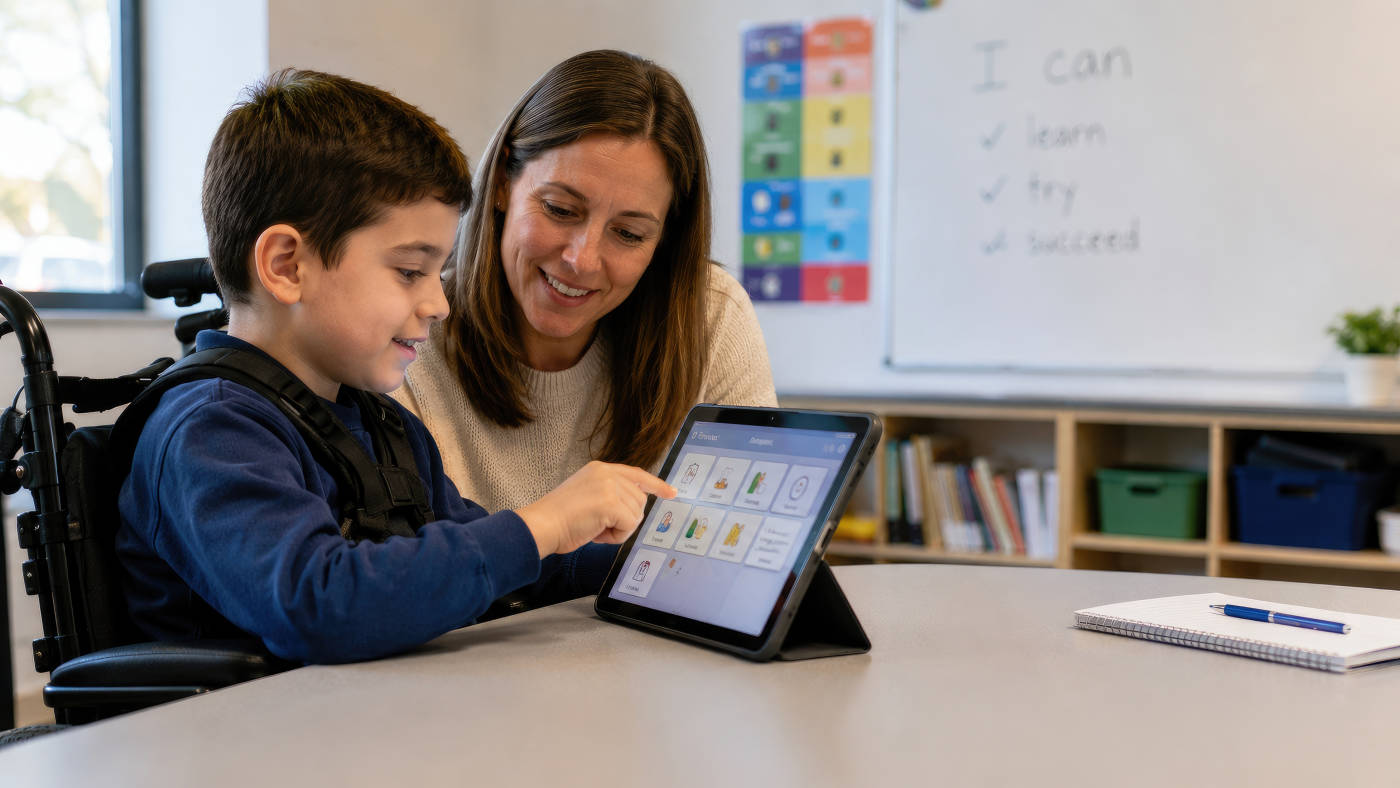
When a parent calls me about a suspension, the first thing I usually hear is, "I don't understand how this got so serious so fast." New federal data help explain why that call comes more often from families of children with disabilities. Below I go through what the numbers show, why they matter, and what you can do if your child is facing discipline at a Long Island school.
What the new federal data show
Every few years, the U.S. Department of Education's Office for Civil Rights (OCR) collects data from almost every public school in the country. Its latest report, A First Look: The Civil Rights Data Collection, 2023–24, covers about 49.7 million students in more than 17,000 school districts and 97,000 schools.
In that school year, about 15% of students were served under the Individuals with Disabilities Education Act (IDEA), and about 4% were served only under Section 504.
The gaps in discipline are hard to ignore. IDEA students were 15% of K–12 enrollment, but they accounted for:
· 23% of students who were mechanically restrained
· 68% of students who were secluded
· 73% of students who were physically restrained
· 27% of students who received one or more out-of-school suspensions
Suspensions are also rising overall. NPR reported on October 7, 2026 that students lost more than 14 million school days to out-of-school suspensions in 2023–24, up from about 11 million a decade earlier. That analysis comes from Dan Losen of the National Center for Youth Law. NPR also reported that students with disabilities were suspended out of school at disproportionately high rates. Losen's research shows that most districts suspend students for what he calls minor offenses, like truancy, repeated lateness or dress code violations, rather than for unsafe behavior.
Why this happens
In my experience, behavior is often a form of communication. A child with ADHD, anxiety, autism, a learning disability or an emotional disability may act out when needs go unmet: support is missing, the IEP isn't being followed, or a behavior plan was never written. When the school answers with removal instead of support, the child misses instruction and services, falls further behind, and the cycle repeats.
None of this means your child's behavior doesn't matter. It means discipline for a student with a disability has to account for the disability. The law requires exactly that.
What Long Island parents can do
1. Know what a Superintendent's Hearing is
Under New York Education Law §3214, a principal can suspend a student for up to five school days. A longer suspension requires a Superintendent's Hearing, held in Nassau and Suffolk districts alike. At that hearing your child has the right to:
· reasonable notice of the charges
· representation by an attorney
· question the district's witnesses
· present evidence and witnesses of their own
The hearing is a real legal proceeding. As a former Queens Assistant District Attorney, I take every one of these hearings seriously, and I treat the record as if it could matter later, because it can.
2. Ask for a manifestation determination review
If your child has an IEP, a removal of more than 10 school days (or a pattern of shorter removals that adds up) is a change in placement. Within 10 school days, the district must hold a manifestation determination review (MDR). The team must ask two questions:
· Was the conduct caused by, or directly and substantially related to, your child's disability?
· Was it the direct result of the district's failure to carry out the IEP?
If the answer to either question is yes, the conduct is a manifestation. In that case your child generally returns to their placement, and the team must address the behavior. Narrow exceptions apply for weapons, drugs and serious bodily injury. Students with 504 plans, and in some cases students the district should have known had a disability, also have protections. You are a member of the MDR team. Come prepared with evaluations, report cards and anything showing how the IEP was or wasn't followed.
3. Request an FBA and a BIP
A functional behavioral assessment (FBA) looks at why a behavior happens. A behavioral intervention plan (BIP) sets out the supports and strategies to address it. When the conduct is a manifestation, the district must conduct an FBA and put a BIP in place, or review an existing one. You can request an FBA in writing at any time, even before a hearing. Ask that the BIP be reviewed at the CSE so it becomes part of your child's program.
4. Call before the hearing, and before anyone signs a statement
The most important thing you can do is reach out early. Schools often ask students, and sometimes parents, to write or sign statements soon after an incident. Those statements can be used at the hearing, and in some cases they reach law enforcement. Please talk with a lawyer before your child signs anything or answers questions about the incident.
When families call our team early, we can request records, prepare witnesses, coordinate with the CSE on the MDR, and explore whether the matter can be resolved before the hearing. We partner with you at every step, and we keep you informed so you can make each decision with confidence.
Frequently asked questions
How long can a Long Island school suspend my child without a hearing?
Under Education Law §3214, a principal can impose a suspension of up to five school days. Parents can ask for an informal conference with the principal. A suspension of more than five school days requires a Superintendent's Hearing.
Does an IEP protect my child from being suspended?
An IEP doesn't prevent discipline, but it adds protections. A removal of more than 10 school days triggers a manifestation determination review. If the conduct is a manifestation of the disability, your child generally returns to their placement, and the district must conduct an FBA and put a behavior plan in place.
Should my child write a statement about what happened?
Please call first. A statement written under stress can be incomplete or misunderstood, and it can be used at the hearing. We can help you decide whether a statement makes sense and what it should say.
Talk with our team
If your child has been suspended or has a Superintendent's Hearing coming up, Call (516) 792-9119 or Schedule a consultation. We'll walk through your options together.
Attorney Advertising. Prior results do not predict a similar outcome. This article is general information, not legal advice. Every case depends on its own facts.
Sources
· U.S. Department of Education, Office for Civil Rights, A First Look: The Civil Rights Data Collection, 2023–24 (Sept. 30, 2026)
· NPR, "5 things to know from the latest federal civil rights data on public schools" (Oct. 7, 2026)
· N.Y. Education Law §3214; 34 CFR §300.530; 8 NYCRR §§200.22 and 201.4
Suggested internal links (live educationalesq.com URLs)
· "Superintendent's Hearing" → /practice-areas/superintendent-hearings/
· "Nassau" / "Suffolk" → /nassau-county-superintendent-hearing-lawyer/ and /suffolk-county-superintendent-hearing-lawyer/
· "manifestation determination review" → /blog/what-is-a-manifestation-determination-review/
· "suspension" → /blog/what-types-of-suspensions-can-be-given-to-a-new-york-student/
· "right to" (hearing rights) → /blog/what-are-your-rights-during-a-school-disciplinary-hearing/
· "evidence" → /blog/the-importance-of-evidence-in-school-disciplinary-hearings/
· "Schedule a consultation" → /contact/